Key Takeaways
- The visible costs are less than half the total. A 15-machine fleet runs $150,000 to $250,000 a year before anything unplanned happens.
- Over ten years that fleet costs $3.6 million to $6.4 million once compliance, out-of-scope repairs, taxes, courier, and staff time are counted, which is two to three times the usual estimate.
- Out-of-scope work typically adds 5 to 10 percent a month. One skimming attack runs $5,000 to $10,000 and storm or vandalism damage can pass $20,000.
- At the industry average of 95 percent uptime a machine sits dead about 18 days a year. NextBranch held 99 percent across its managed fleet in 2025.
For most banks and credit unions, the cost of running an ATM fleet looks deceptively simple on paper. There is the equipment line on the capital budget, the annual maintenance contract, and the armored courier invoice. Add it up, and the number feels manageable.
The problem is that the visible line items account for only a fraction of what an ATM or ITM actually costs an institution to operate over its useful life. Once compliance cycles, software licensing, vandalism repair, staff time, downtime, and the opportunity cost of tied-up capital are layered in, the true cost of managing an in-house ATM fleet is often two to three times what most CFOs and COOs estimate when they first build the budget.
This is the breakdown that rarely makes it into the original business case.
The Visible Costs Are the Smaller Half
Before getting to the hidden costs, it helps to set the floor with the costs every institution already accounts for. A new ATM runs roughly $50,000 to purchase outright and have installed, with ITMs landing $20,000 to $30,000 higher because of their video teller hardware and advanced functionality. Annual maintenance contracts typically run around $6,000 per machine, or $90,000 for a 15-ATM fleet. Add transaction processing, network connectivity, armored courier visits, and cash inventory, and the baseline rises to between $150,000 and $250,000 a year before anything goes wrong.
For most institutions, this is where the budget conversation ends. It is also where the real cost analysis should begin.
The Hidden Costs That Make the Difference
1. Compliance and Regulatory Upgrades
ATMs are not buy-it-and-forget-it equipment. They run Windows. They process card transactions under PCI DSS requirements. They need to stay current with EMV standards, ADA accessibility rules, and the manufacturer’s own software roadmap. Compliance cycles including Windows operating system upgrades, new PCI keypad encryption standards, and more add up to roughly $10,000 or more per machine over the life of the ATM. These cycles arrive every two to four years whether the institution has budgeted for them or not. For a 15-ATM fleet, a single compliance cycle can mean an unplanned $150,000 expense that does not appear on any contract until the manufacturer announces it.
2. Software Licensing, Security Patching, and Monitoring
Windows licensing fees, ATM operating software subscriptions, security software including application whitelisting and hard drive encryption, and ongoing monitoring, patch management and software updates (managed services) are recurring costs that often get split across IT and operations budgets, which makes them easy to undercount. They are also the costs most likely to be deferred when budgets tighten, which creates compounding security and compliance risk down the line.
3. Out-of-Scope Charges and “Not Included” Repairs
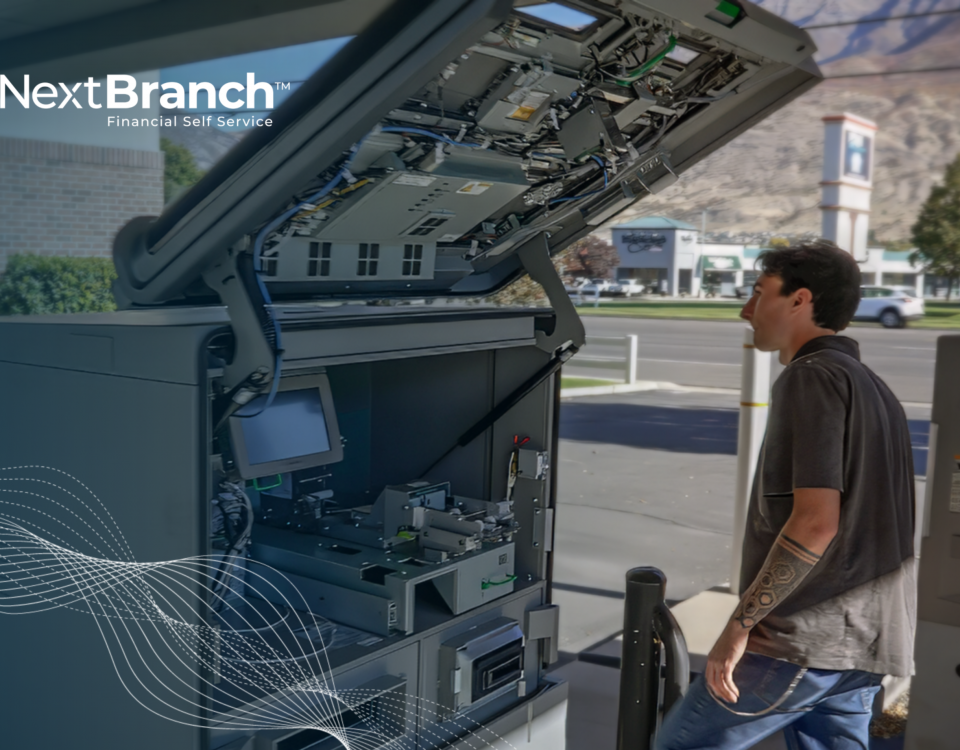
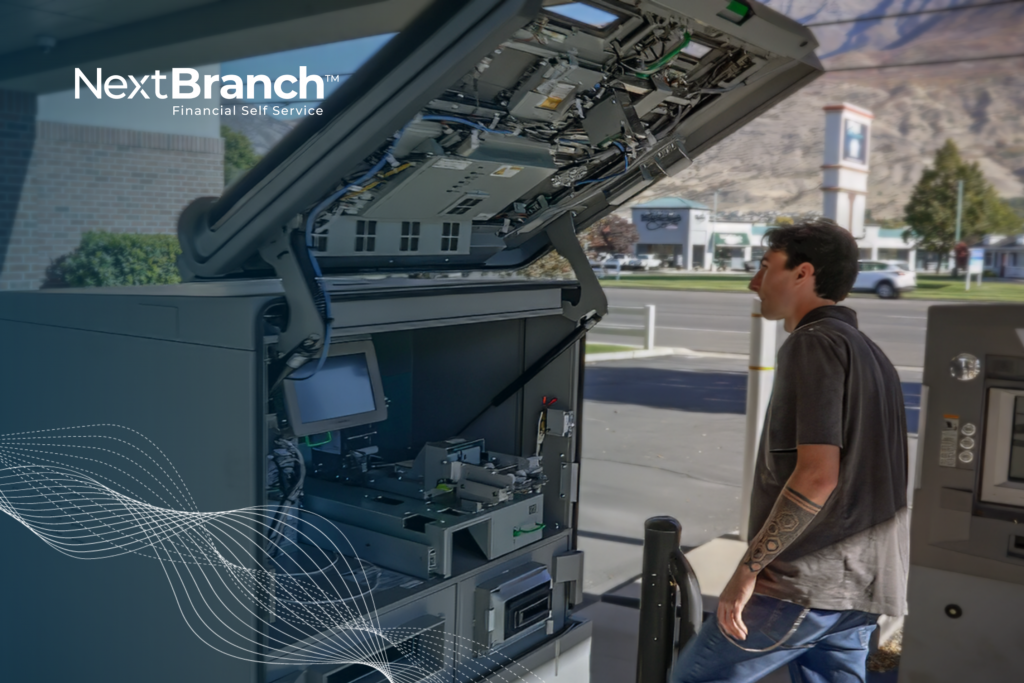
This is the cost that surprises operations leaders most often, because it does not appear until after the contract is already signed. Traditional ATM service agreements come with a long list of conditions that fall outside standard maintenance scope: vandalism damage, errors caused by 3rd parties or staff (armor technician, etc.), water intrusion, customer-induced damage, consumable supplies (cash cassettes, receipt paper, etc.), after-hours dispatches, no-fault found visits, weather-related repairs, and any other visit the vendor classifies as outside the original scope of work. Each of these gets billed separately, and large equipment vendors are well-known for taking a strict view of what counts as in-scope when a service ticket lands on their desk.
In practice, out-of-scope billing typically adds 5% to 10% on the low end, on top of contracted maintenance costs each month, and in some months it runs considerably higher when an incident hits. A single skimming attack can run $5,000 to $10,000 to remediate. Vandalism or significant weather damage can exceed $20,000 in equipment repairs alone. An attempted hook and chain attack often requires a full machine replacement. Because none of this lands on the original capital or operating budget, it tends to show up as a steady drumbeat of unwelcome invoices throughout the year, each requiring justification to finance and each shifting the real cost of the fleet upward.
4. Taxes and Insurance
Many states assess personal property taxes on equipment such as ATMs and ITMs. Additionally, given the high risk of ATM equipment, financial institutions will want to make sure they have adequate insurance coverage on not only the equipment, but also the vault cash to cover cases of vandalism and theft.
5. Staff Time and Vendor Coordination
This is the cost that almost never makes it into a spreadsheet, even though it is one of the largest. The traditional ATM model requires an institution to coordinate across at least five separate vendors: the equipment manufacturer, the maintenance provider, the armored courier, the transaction processor, and the software or compliance vendor. When something breaks, the institution’s staff is the one chasing the chain of accountability. That work falls to operations, IT, and sometimes branch managers, and it pulls them away from the work that actually grows the institution. Anecdotally, most operations leaders describe ATM management as the part of their job they like the least, which is a reasonable proxy for how much time it consumes.
6. Downtime Cost
When an ATM goes down, the institution loses interchange revenue, takes a hit on member or customer experience, and absorbs the staff time required to redirect service. Industry uptime averages run between 95% and 97%, which sounds high until it is translated into hours. A 95% uptime rate means each machine is offline for the equivalent of 18 days a year. For institutions where the ATM is the primary self-service channel for younger members, that downtime translates directly into lower NPS scores and erosion of the digital-first value proposition the branch is trying to build. By comparison, NextBranch’s 2025 fleet uptime came in at 99%, driven by AutoResolve, an automated remote-fix system that resolved 54% of service events without ever dispatching a technician.
7. Capital Opportunity Cost
Fifteen ATMs at $50,000 each is $750,000 in capital sitting on the balance sheet as a depreciating asset. That capital is not available for branch expansion, lending capacity, technology investment, or anything else that generates return. ITM fleets push that number well past $1 million. Over a 7- to 10-year replacement cycle, the carrying cost of that locked-up capital is often the single largest hidden cost on the list.
The 10-Year Math for a Typical ATM Fleet
When all of these costs are pulled into the same view, the picture changes considerably. The table below estimates the total cost of ownership for a 15-ATM fleet over a 10-year period under a traditional in-house model. Total costs depend upon ATM functionality and services provided.
| Cost Category | 10-Year Estimate (15 ATMs) |
|---|---|
| Equipment purchase (replaced every 7-10 years) | $600,000 – $1,200,000 |
| Annual maintenance agreements | $900,000 – $1,200,000 |
| Compliance and regulatory upgrades | $150,000 |
| Software licensing and managed services | $600,000 – $900,000 |
| Out-of-scope charges and vandalism repairs | $450,000 – $1,000,000 |
| Taxes and insurance | $70,000 |
| Armored courier and cash management | $400,000 – $1,300,000 |
| Staff time (estimated 0.5 FTE) | $400,000 – $600,000 |
| Total 10-year cost of ownership | $3.6M – $6.4M |
The number that lands in the original business case is almost always the equipment line and the maintenance contract, which together account for less than half of what the fleet actually costs to run. Everything else is either spread across other budgets, written off as one-off events, or never measured at all. This calculation does also not take into account annual fee increases on maintenance agreements, software licensing, managed services, and armored courier fees, which typically range 4%-8%.
How Outsourcing Changes the Math
The case for ATM outsourcing is not that it eliminates these costs. The costs still exist. What changes is who absorbs them, how predictable they become, and how much staff time gets returned to higher-value work.
Under a fully outsourced model, the equipment ownership, compliance upgrades, vandalism coverage, software licensing, cash management, and managed services including security patching and remote monitoring all fold into a single monthly fee. There is no upfront capital outlay and no surprise compliance bill. Just as importantly, there are no out-of-scope service charges, which removes one of the most persistent sources of friction in traditional ATM contracts. The institution pays a predictable amount each month and reallocates the staff time that used to be spent coordinating vendors and contesting line items. Most NextBranch customers see operating cost reductions of up to 30% once the full picture of in-house ownership is compared against the subscription model.
For institutions that prefer to retain ownership of the equipment, a managed services model offers the same operational relief without the equipment subscription. Either path replaces the patchwork of five vendors with a single point of accountability.
The Real Question for the Business Case
The right question to ask is not “what does our ATM fleet cost?” The question is “what does our ATM fleet cost when every dollar is accounted for, including the ones that show up in other people’s budgets?” When the math is built that way, the in-house model is rarely the cheaper option, and almost never the simpler one.
For institutions evaluating their next replacement cycle, this is the moment to run the full number before the capital request goes in front of the board.
NextBranch is a subsidiary of Grant Victor, Hyosung’s largest U.S. reseller partner and 2025 Partner of the Year. Together, Grant Victor companies own and operate over 7,000 ATMs, ITMs, and TCRs nationwide for community banks and credit unions. To see what your fleet would cost under a managed model, schedule a consultation.
Frequently Asked Questions
What does an ATM fleet really cost over ten years?
For a typical 15-machine fleet, $3.6 million to $6.4 million once equipment, maintenance agreements, compliance upgrades, software, out-of-scope repairs, taxes, insurance, armored courier, and staff time are all counted. That is two to three times what most institutions estimate from the purchase and maintenance lines alone, and it does not include the 4 to 8 percent annual increases that show up on maintenance, software, and courier contracts.
Why do ATM invoices keep arriving outside the budget?
Because compliance upgrades, vandalism, and out-of-scope repairs sit outside the standard maintenance contract. Out-of-scope work typically adds 5 to 10 percent a month, skimming remediation runs $5,000 to $10,000, and weather or vandalism damage can pass $20,000 in equipment repairs.
Which hidden costs are the largest?
Capital tied up in depreciating machines, about $750,000 for 15 ATMs and over $1 million for an ITM fleet, plus staff time on vendor coordination, software licensing and security patching, compliance cycles every two to four years, and downtime. Most of these sit in different budgets, which is why they are rarely added up.
How much does outsourcing change the math?
One monthly fee covers equipment, compliance, vandalism, software, cash management, security patching, and monitoring, with no capital outlay and no out-of-scope charges. NextBranch customers report operating costs down by up to 30 percent, and a managed services option exists for institutions that want to keep owning the equipment.